
In the supporting industry, choosing the right type of engineering plastics not only determines product lifespan but also directly impacts operational costs and a business's competitive advantage. ABS, POM, and PC are the three most popular names, yet each possesses distinct technical "personalities". This article will provide a detailed analysis to help you make the most accurate decision for your processing project.
Technical specifications and advantages of ABS, POM, and PC
To select the appropriate engineering plastics material, it is first essential to understand their physical and mechanical nature under the influence of temperature and pressure during the injection molding process.
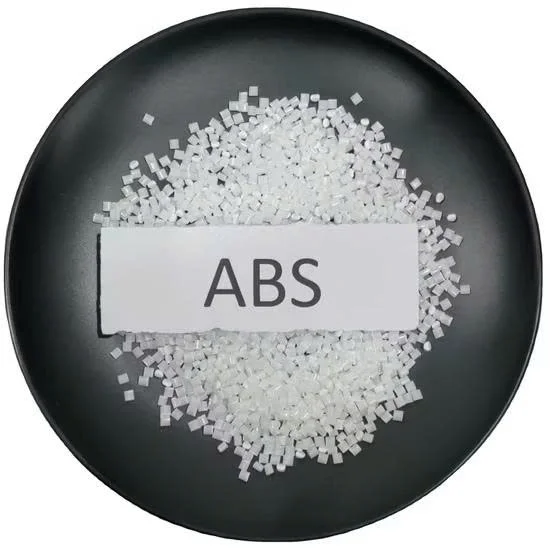
ABS plastic (Acrylonitrile Butadiene Styrene)
This is a thermoplastic that offers a perfect balance between rigidity and impact resistance. ABS is well-known for its ease of processing and low shrinkage rate, which helps the output products maintain dimensional stability. Notably, the surface of ABS plastic adheres exceptionally well to paint and electroplating, making it suitable for products requiring high aesthetic value.
POM plastic (Polyoxymethylene)
Often referred to as "plastic steel", POM possesses superior stiffness, mechanical strength, and wear resistance. The biggest selling point of POM is its low coefficient of friction and self-lubricating property. However, POM exhibits a high shrinkage rate during cooling, which demands extremely precise mold design engineering to avoid dimensional deviations.
PC plastic (Polycarbonate)
If extreme durability and transparency are your top priorities, PC is an irreplaceable choice. This type of engineering plastics offers the highest impact resistance (it does not shatter like glass or other plastics) and can withstand environmental temperatures upwards of 120°C. However, PC plastic carries a higher cost and requires a strict material drying process prior to processing to prevent hydrolysis, which can degrade transparency.
Application analysis: When should you choose which type of engineering plastics?
Material selection must be grounded in the actual operating environment of the plastic part.
When should you choose ABS?
ABS is the optimal choice for projects that need to optimize mass production costs while still guaranteeing durability. It is commonly used for the external housings of electronic devices, automotive components (non-heat resistant), or consumer products requiring diverse colors and smooth surfaces. If your part does not have to operate in high-temperature environments or come into contact with harsh chemicals, ABS will help save your budget significantly.
When should you choose POM?
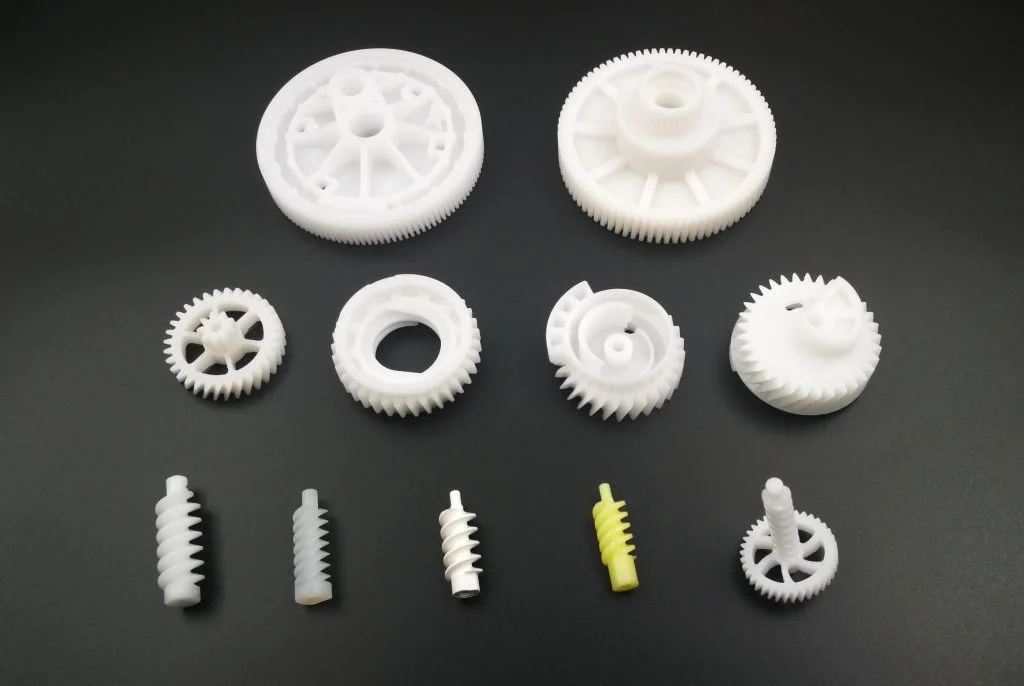
Choose POM when you need to process mechanical drivetrain components. Thanks to its rigid, fatigue-resistant, and wear-resistant properties, POM is an ideal metal replacement material for gears, screws, bearings, or couplings in industrial machinery. POM's resistance to solvents and fuels is also vastly superior to ABS.
When should you choose PC?
PC is preferred for high-tech components that require a combination of protection and visibility. Examples include car light housings, occupational protective equipment, transformer enclosures, or premium electronic components that need excellent self-extinguishing and heat-resistant capabilities. In medical applications requiring high-temperature sterilization, PC also demonstrates outstanding advantages.
Factors determining the quality of engineering plastics processing
Regardless of the plastic chosen, final product quality remains tightly dependent on the technical control processes at the factory.
• Mold precision: With engineering plastics, especially POM and PC, the design of the cooling system on the mold plays a vital role. Uneven cooling will lead to warpage or surface sink marks, ruining the mechanical accuracy of the part.
• Injection molding parameter control: Injection pressure and screw speed must be flexibly adjusted according to the viscosity of each plastic type. PC plastic demands high melting temperatures and immense pressure, while ABS requires stability to avoid burning the material.
• Input raw material treatment: Engineering plastics are highly sensitive to moisture. Equipping a modern dehumidifying dryer system helps eliminate air bubbles and silver streaks on the product surface, ensuring the structural consistency of the plastic's interior.
There is no single best plastic, only the plastic that is most suitable for the technical requirements and budget of your project. If you are still undecided, consulting with a processing unit rich in mold and engineering plastics experience will help you find the optimal solution, guaranteeing both quality and economic efficiency.
ZENG HSING VIET NAM
Address: Unit 03-08, Canary Plaza, Binh Duong Boulevard, Binh Hoa Ward, Thuan An City, Binh Duong Province, Vietnam.
Phone: (+84) 0355 846 965 (Mr. Nghia) – (+84) 0362 476 478 (Mr. Nam)
Email: nghia_duong@zenghsing.com.vn or nam_vu@zenghsing.com.vn
Website: zenghsing.vn

