
Wiring networks function as the vital conduit continuously transmitting power and control signals across entire industrial equipment systems. The cable harness manufacturing process demands seamless coordination between automated mechanical machinery and stringent engineering quality control standards. Understanding each detailed manufacturing stage outlined below helps enterprises accurately assess product build quality and eliminate short-circuit fire hazards before equipment enters live service.
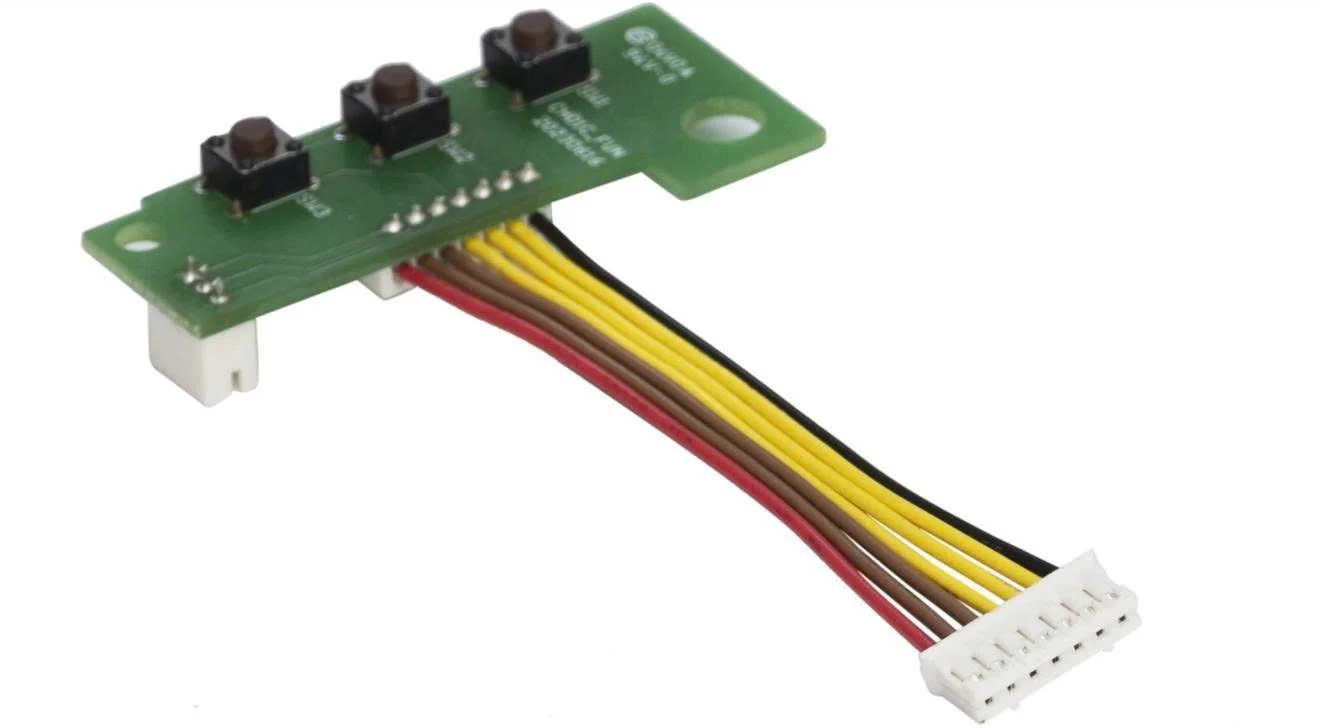
Conductor preparation through automated cutting, stripping, and terminal crimping
The operating quality of a wiring harness depends heavily on mechanical precision achieved during initial preparatory stages. Any length discrepancy or metallic core damage can severely compromise electrical conductivity down the line.
The cable harness manufacturing workflow initiates by feeding single-conductor wires or multi-core cables into high-precision automated cutting machinery. This equipment measures exact cut lengths according to engineering drawings while simultaneously stripping the outer insulation jacket from both ends. Stripping blades are calibrated with precise blade depth and stripping force to cleanly remove polymer sheathing without scraping, notching, or fraying delicate internal copper strands.
Immediately after stripping, bare stranded wire ends enter the mechanical terminal crimping station. Assembly operators position the bare copper core into the terminal contact, after which pneumatic or specialized electric crimping presses compress the terminal barrel around the conductor bundle. A certified crimp joint must meet two strict engineering criteria: an adequate electrical contact surface area to ensure normal current flow without excessive thermal buildup, and robust mechanical pull-force strength to withstand vibration without wire pull-out risks.
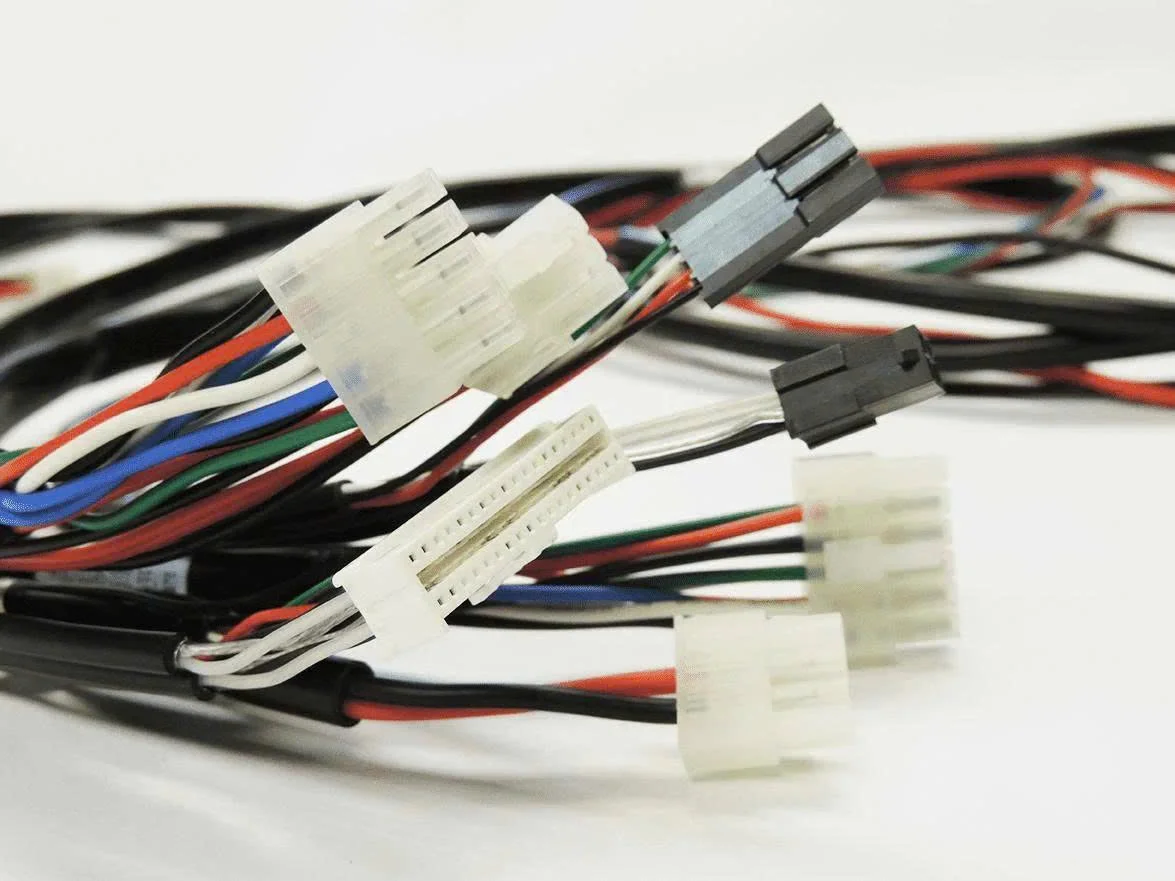
Structural formation via protective sleeving and connector housing insertion
Once basic conductive cores are prepared, the wire harness advances to mechanical reinforcement to adapt to demanding industrial operating environments.
Depending on specific machine operational parameters, technicians apply secondary external protective jacketing:
• Heat-shrink tubing: Slid over splice junctions and contact transitions, then recovered using directed hot air to form a sealed insulating barrier that locks out moisture and airborne particulate ingress.
• Corrugated conduit or fiberglass braided sleeving: Routed along harness main trunks to deliver abrasion resistance, withstand physical shear stresses, and provide thermal insulation when routed near high-temperature machine zones.
Once protective tubing is seated neatly, terminated contact pins are inserted into molded plastic connector housings. This step requires technicians to cross-reference wire insulation color codes against pinout assignment schematics. Each metallic terminal produces a tactile and audible "click" when pushed into place, signaling that the primary retention lance has latched securely to prevent terminal back-out during field mating with circuit boards.
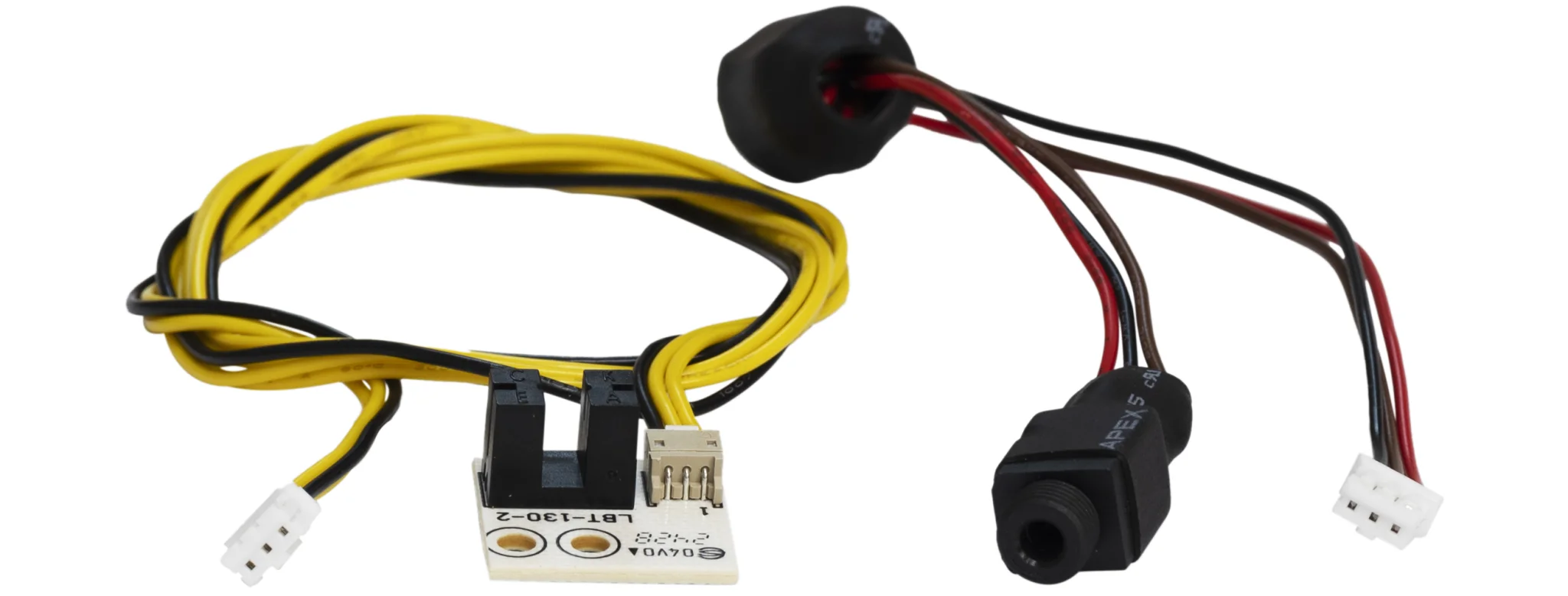
Comprehensive electrical continuity testing and dispatch packaging
The final stage of the cable harness manufacturing line serves as a quality screening gate, ensuring every completed harness meets operational safety standards prior to higher-level system integration.
Completed harness assemblies are mounted onto dedicated electronic continuity test benches equipped with custom interface mating fixtures. The test instrument sweeps automated test signals across all conductive pathways to verify three critical parameters:
• Continuity testing: Confirming seamless signal transmission from end to end without latent internal conductor breaks.
• Short-circuit testing: Ensuring adjacent wire runs maintain complete electrical isolation without insulation breakdown or cross-short leakage.
• Pinout schematic verification: Instantly flagging misplaced color-coded leads or reversed polarity assignments, preventing catastrophic board damage upon initial field power-up.
Harnesses clearing electronic validation proceed to final visual and physical inspection benches. Quality technicians audit overall harness dimensions, conduit tension, and apply specification tracking labels. Finally, assemblies are coiled, packaged with desiccant bags, and dispatched to clients on agreed delivery timelines.
GET THE BEST QUOTE
Contact ZENG HSING now via Zalo or Website to receive advice on suitable specifications and get a prompt quotation!
Durable cable harness manufacturing solutions with Zeng Hsing
Industrial equipment stability stems from compact yet rugged electrical connections inside the chassis. Equipped with high-precision terminal crimping applicators and automated electrical continuity testing stations, Zeng Hsing delivers engineering-grade cable harness manufacturing services that ensure safe machine operation at competitive production costs.
ZENG HSING VIET NAM
- Address: Unit 03-08, Canary Plaza, Binh Duong Boulevard, Binh Hoa Ward, Ho Chi Minh City, Vietnam
- Hotline: (+84) 0355 846 965 (Mr. Nghia) – (+84) 0362 476 478 (Mr. Nam)
- Email: nghia_duong@zenghsing.com.vn / nam_vu@zenghsing.com.vn
- Website: zenghsing.vn

